


When to Call a Plumber for Pipe Repair vs. Doing It Yourself
You noticed it this morning: a damp ring under the sink cabinet, a soft spot in the drywall near the bathroom, or a water bill that jumped $40 for no obvious reason. Now you’re standing there with a wrench in one hand and your phone in the other, wondering whether this is a Saturday-afternoon fix or a call you need to make before the problem gets worse.
The honest answer isn’t about how confident you feel with tools. It’s about what kind of pipe problem you actually have. The failure type, the pipe material, the location of the leak, and the age of your home all change whether a DIY attempt saves you money or creates a much larger bill. In Redwood City, where the median home is roughly 58 years old and soil conditions vary by neighborhood, that calculation is more complicated than most online tutorials account for.
Here’s a clear framework for making that call, starting with what homeowners can safely handle and ending with the situations where professional diagnosis isn’t optional.
Pipe Repairs That Are Generally Safe to Handle Yourself
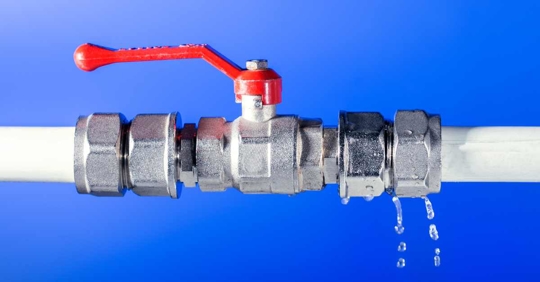
Some pipe repairs are genuinely low-risk DIY territory. Tightening a compression fitting on an exposed supply line under a sink, replacing an accessible shutoff valve, or applying a temporary pipe repair clamp to a visible run while you arrange a professional assessment are all reasonable tasks for a careful homeowner. These are surface-level fixes on accessible sections with a working shutoff valve nearby and no material compatibility questions involved.
The ceiling for safe DIY work is defined by a few conditions: the repair is on a modern material like copper or PEX, the pipe is fully visible and accessible, and you’re not cutting into a wall, joining dissimilar materials, or working anywhere near the main supply line. Once any of those conditions breaks down, the risk profile shifts meaningfully.
There’s one reliable stop sign worth keeping in mind: if the same section leaks again after you’ve repaired it, that’s not bad luck. It’s the pipe telling you something is failing along its length, not just at a single point. A second patch won’t fix that. Diagnosis of the root cause will.
When the Pipe Itself Is the Problem, Not Just the Fitting
Some leaks aren’t really about the fitting or the joint. They’re about the condition of the pipe itself, and that distinction changes everything about what a repair requires.
Galvanized Steel Pipe Failure
Galvanized steel pipes corrode from the inside out. The interior walls narrow over decades, flow pressure builds, and the threaded joints become the first place that pressure escapes. Patching one joint often just redirects stress to the next one, because the pipe wall is uniformly degraded rather than damaged at a single point. Homes in Redwood City neighborhoods like Mount Carmel were built primarily in the 1920s through the 1940s, while Woodside Plaza homes date largely to the 1950s and 1960s. Many have galvanized supply lines now operating well past their intended lifespan.
Pinhole Leaks in Copper Lines
Pinhole leaks in copper lines look simple and aren’t. A pinhole leak is often a symptom of corrosion driven by water chemistry or galvanic interaction between dissimilar metals, meaning additional failures are likely nearby. Pipe leak repair in homes with this kind of aging copper means evaluating whether a spot repair is appropriate at all or whether a broader repiping assessment makes more sense.
Repairs That Require Diagnostic Equipment
These repairs, along with any of the following, require diagnostic equipment homeowners don’t have access to:
- Slab leaks (leaks occurring beneath a concrete foundation) require acoustic detection or thermal imaging to locate without destructive excavation
- Leaks behind walls or under floors need camera inspection to confirm location and pipe condition before any access point is opened
- Joint separations caused by soil movement or seismic activity require pressure testing and visual inspection to understand the extent of the failure
A plumber must confirm pipe material before recommending any repair method. Modern fittings and repair techniques applied to aged galvanized pipe or polybutylene can fail under pressure, turning a repair into a replacement under worse conditions.
Situations That Always Require a Licensed Plumber
There’s a short list of situations where the right move is to shut off the main water supply and call immediately. Burst pipe repair, active flooding, sewer backups, and any leak with potential gas line involvement are unambiguous professional territory. Shutting off the main is the correct first step. Everything after that is licensed work.
What many homeowners don’t know is that significant pipe work in Redwood City requires a permit through the City of Redwood City Community Development Department. Repiping projects, sewer lateral repairs, water heater replacements, and gas line work all fall under permit requirements. DIY work on these jobs isn’t just technically risky. It’s non-compliant with city code, which creates liability if the work is ever discovered during a home sale or insurance claim.
That insurance dimension matters more than most people realize. Homeowner’s insurance policies typically exclude damage caused by DIY plumbing work. If a self-repair fails and water damage ruins flooring, drywall, or cabinetry, the remediation cost falls entirely on the homeowner rather than on a licensed plumber’s insurance. The California Contractors State License Board licenses plumbing contractors precisely because the failure consequences in this trade can be significant. That licensing carries bonding and insurance that a homeowner repairing their own lines doesn’t have.
Why Redwood City Homes Deserve Extra Caution
Generic DIY guides don’t account for local conditions, and in Redwood City, those conditions matter before you pick up a wrench.
Aging Housing Stock
With a median home age of approximately 58 years, Redwood City has significant variation in pipe materials and failure modes across neighborhoods. A home in Redwood Shores, where most residential construction took hold in the 1980s and 1990s, has a completely different plumbing profile than a bungalow in Mount Carmel built in 1938. Confirming what’s actually in the walls before committing to a repair method isn’t overcautious here; it’s standard practice.
Seasonal Soil Movement
Redwood City’s soil varies between clay-heavy areas and sandy loam near Redwood Shores. The clay soils expand and contract seasonally, applying inconsistent lateral stress to underground pipes. Recurring drain backups appearing between November and January often reflect soil-movement-related stress rather than household debris. No amount of plunging or drain cleaner addresses a pipe that’s being compressed and shifted by the ground around it.
Seismic Activity
The San Andreas Fault passes approximately 2,000 feet from Redwood City’s southwestern edge. Seismic activity can shift pipes, loosen joints, and crack connections, particularly in homes built on Bay Mud or filled tidal flats. A leak that appears isolated may be a symptom of joint movement across a longer section. A surface inspection can’t confirm this without professional evaluation.
What a Trained Eye Catches That a Tutorial Can’t
Online tutorials teach technique, not diagnosis. They show you how to cut PEX, solder copper, or replace a fitting, but they don’t tell you whether the leak you found is the actual problem or a downstream signal of something more significant.
Our team at Oro Pro Plumbing Inc. undergoes continuous training, including certifications, water heater seminars, vendor-led sessions, and hands-on practice in our in-house training facility. That training covers water pressure behavior, pipe material condition across an entire system, shutoff valve integrity, and early signs of system-wide deterioration that aren’t visible to someone looking only at the wet spot in front of them.
Pipe material compatibility is a real consideration: the interaction between galvanized steel, copper, and modern PEX or CPVC requires the right transition fittings and techniques, or corrosion accelerates at the joint. The question worth asking before any DIY pipe repair is this: is the leak the problem, or is it a symptom of something the pipe is trying to tell you?
Making the Call
Visible, accessible repairs on modern pipe materials with a working shutoff valve in place are reasonable DIY territory. Anything involving aged galvanized pipe, access through walls or floors, permit-required work, recurring failures, or local factors like soil movement and seismic history warrants a professional call.
When you’re not sure which side of that line you’re on, our team at Oro Pro Plumbing Inc. can help you figure it out. Reach us at (650) 476-2589.